





High Frequency Inverter Safety Standards and Compliance Guide
- Understanding high-frequency inverter technology and risk profile
- What makes HF inverters different
- Primary safety risks to address
- Relevant technical terms
- Key international standards for safety and EMC
- Electrical safety standards (IEC, UL)
- Electromagnetic compatibility (EMC)
- Grid-interconnection and anti-islanding
- Design controls, testing and documentation
- Design for compliance
- Testing plan
- Required documentation for certification
- Market access strategy and supplier/manufacturer evaluation
- Comparing standards and their applicability
- Evaluating manufacturers and OEMs
- Production testing and in-service monitoring
- Practical checklist: achieving compliance for HF inverters
- Design-stage checklist
- Pre-certification and testing checklist
- Post-certification actions
- Case study: Certification journey and data-backed outcomes
- Example timeline for a 1–3 kW HF inverter
- Performance and compliance metrics
- Data sources and lab references
- Supplier profile: Guangzhou Congsin Electronic Technology Co., Ltd.
- Frequently Asked Questions (FAQ)
- 1. What is the most important safety standard for high frequency power inverters?
- 2. Do I need EMC testing for HF inverters?
- 3. How do I reduce the chance of failing certification tests?
- 4. Are patents and R&D important when choosing a manufacturer?
- 5. Can firmware issues affect safety certification?
- 6. What documents should I request from a supplier before purchase?
Overview: This guide explains safety and compliance requirements for high frequency power inverters (HF inverters), focusing on electrical safety, electromagnetic compatibility (EMC), grid-interconnection, and product certification. It is intended for manufacturers, OEMs, system integrators and technical buyers who need to design, test or procure reliable HF inverters that meet international regulatory expectations. The recommendations are grounded in recognized standards (IEC, UL, FCC) and practical manufacturing controls to help you achieve market access and minimize field safety risk.
Understanding high-frequency inverter technology and risk profile
What makes HF inverters different
High frequency power inverter designs use high-speed switching (tens to hundreds of kHz) with compact magnetics and often employ switch-mode topologies (e.g., full-bridge, half-bridge, resonant). Compared with low-frequency transformer-based inverters, HF inverters achieve higher power density and lower weight but bring unique safety and EMC challenges: higher dv/dt and di/dt stress on components, greater EMI generation, potential capacitive coupling, and different thermal dissipation behavior.
Primary safety risks to address
Key hazards from HF inverters include electric shock (lack of functional or basic insulation), fire from overheating or component failure, hazardous voltages on accessible parts, inadvertent islanding when grid-connected, and electromagnetic interference disrupting nearby equipment. Early design-stage hazard analysis (e.g., Preliminary Hazard Analysis, FMEA) is essential to identify risks and determine mitigations like creepage/clearance, reinforced insulation, protective earth connections, thermal cutouts, and robust control firmware.
Relevant technical terms
Familiarity with terms such as isolation transformer, galvanic isolation, reinforced/basic insulation, leakage current, standby power, harmonic distortion (THD), and EMC immunity/susceptibility helps in interpreting standards and test reports when assessing compliance of a high frequency power inverter.
Key international standards for safety and EMC
Electrical safety standards (IEC, UL)
IEC 62109 (safety of power converters for use in photovoltaic systems and similar power converters) is widely referenced for inverter safety characteristics. For North America, UL 1741 (Inverters, Converters, Controllers and Interconnection System Equipment for Use With Distributed Energy Resources) is a primary standard for grid-tied inverters. Manufacturers commonly design to IEC 62109 and obtain UL 1741 listings or equivalent to ensure global market acceptance.
Authoritative links: IEC 62109 details: IEC Webstore; UL 1741 reference: UL Standards Catalog - UL 1741.
Electromagnetic compatibility (EMC)
High frequency switching increases EMI risk. EMC standards such as IEC 61000 series (immunity and emission), European EMC Directive requirements (EN 55014/EN 55022 families for emissions), and FCC Part 15 in the US (radiated and conducted emissions) mandate limits and test methods. Ensure conducted emission, radiated emission, immunity to ESD, EFT, surge, and conducted disturbances are tested to relevant classes for your market.
Grid-interconnection and anti-islanding
For grid-connected HF inverters, anti-islanding capability and ride-through performance are critical. Standards and grid codes referenced by UL 1741, IEEE 1547 (U.S. interconnection), and local utility requirements dictate behavior under grid faults, frequency/voltage ride-through and timing for anti-islanding detection. Link: IEEE 1547.
Design controls, testing and documentation
Design for compliance
Incorporate safety and EMC requirements early. Typical design controls include:
- Component selection with appropriate margins (voltage, current, temperature).
- Isolation and creepage/clearance dimensioning per IEC 60664-1.
- EMI mitigation: PCB layout, common-mode chokes, Y capacitors placement and shielding.
- Redundant protection: over-temperature, overcurrent, short-circuit and reverse polarity protections.
Testing plan
A comprehensive test matrix covers safety, EMC, performance and environmental tests. Typical stages:
- Pre-compliance lab tests (early EMC scans, thermal imaging, leakage current).
- Third-party certification testing to IEC/EN/UL or FCC standards.
- Factory production tests: hipot (dielectric withstand), functional burn-in, output waveform verification and insulation resistance.
Required documentation for certification
Certification bodies expect a technical file that includes schematic diagrams, bill-of-materials (BOM) with component datasheets, PCB layouts, thermal calculations, risk assessment (FMEA), test reports, firmware versioning and factory test procedures. Traceability records and change-control logs are essential for maintaining approvals when design revisions occur.
Market access strategy and supplier/manufacturer evaluation
Comparing standards and their applicability
Below is a concise comparison of commonly referenced standards relevant to high frequency power inverter compliance.
| Standard | Scope | Key requirements | Typical test labs / approval marks |
|---|---|---|---|
| IEC 62109 | Safety for power converters (e.g., inverters) | Insulation, protective measures, thermal, fault conditions | Third-party test reports (TUV, SGS) |
| UL 1741 | Inverters and interconnection for DER | Electrical safety, anti-islanding, performance | UL listing (North America) |
| IEC 61000 series | EMC immunity and emissions | Radiated/conducted emissions, ESD, EFT, surge | CE/EMC declaration, FCC in US |
| FCC Part 15 | Radio frequency emissions (USA) | Conducted and radiated emission limits for unlicensed devices | FCC Declaration / test reports |
Evaluating manufacturers and OEMs
When selecting a supplier for high frequency power inverter products or components, validate:
- Quality management certification (e.g., ISO 9001).
- Track record of delivering certified products (request sample certification reports—UL/CE/ETL/FCC etc.).
- Manufacturing controls: automated lines, environmental testing chambers, burn-in capability.
- Support for OEM/ODM customization, firmware maintenance and spare parts availability.
Production testing and in-service monitoring
Implement Production Acceptance Tests (PAT) such as hipot/insulation resistance, output waveform and efficiency checks, cold-start and load-step tests, and periodic factory audits. For field safety, add remote telemetry for temperature, fault logging and firmware updates to rapidly mitigate discovered safety issues in deployed HF inverters.
Practical checklist: achieving compliance for HF inverters
Design-stage checklist
- Perform hazard analysis and FMEA; document mitigations.
- Design to insulation/clearance requirements (IEC 60664-1).
- Select components rated for switching frequencies and expected stress.
- Plan for EMC mitigation measures and include test points in PCB.
Pre-certification and testing checklist
- Run pre-compliance EMC scans (conducted/radiated).
- Verify leakage current and touch current levels.
- Complete thermal and mechanical stress tests (vibration, shock where applicable).
- Obtain third-party safety and EMC reports prior to market entry.
Post-certification actions
Maintain change-control procedures. Keep a technical file updated with new BOMs, firmware releases and production test templates. If a safety incident occurs, use retained logs to support corrective action and inform certification bodies if required.
Case study: Certification journey and data-backed outcomes
Example timeline for a 1–3 kW HF inverter
Typical real-world timeline from prototype to certified product:
- 0–3 months: Concept, risk assessment and prototype hardware.
- 3–6 months: Pre-compliance EMC, iterative hardware fixes.
- 6–9 months: Full lab certification testing to IEC 62109 and EMC standards.
- 9–12 months: Production readiness, factory audits and initial shipments.
Performance and compliance metrics
Manufacturers that follow robust design and testing practices typically see:
- Reduction in EMC failures at certification labs by >70% after pre-compliance testing (industry benchmark).
- Lower field failure rates when production burn-in and hipot testing are implemented (typical reduction 50–80%).
Data sources and lab references
Standards and technical references used in this guide include IEC standard publications and UL standards catalog. For general inverter background, see the inverter overview at Wikipedia. For regulatory specifics, consult the issuing bodies: IEC, UL and IEEE.
Supplier profile: Guangzhou Congsin Electronic Technology Co., Ltd.
Guangzhou Congsin Electronic Technology Co., Ltd., founded in early 1998, is a professional power inverter manufacturer with over 27 years of focused experience. We design, R&D and manufacture a wide range of power solutions—with a core emphasis on DC→AC power inverters, portable power stations, and solar charge controllers. Our catalog includes 100+ models tailored for vehicles, solar systems, RVs and trucks, off-grid homes, outdoor offices, patrol and field construction work.
We operate fully automated production lines, advanced instrumentation and multifunctional testing equipment to ensure product reliability, efficiency and intelligent functionality. Environmental and safety compliance are built in: our quality system is ISO9001 certified and many products hold international approvals such as CE, EMC, LVD, ETL, FCC, RoHS and E-MARK. Several independently developed patents further demonstrate our commitment to innovation.
Congsin’s products serve global markets across Europe, the Americas, the Middle East, Africa and Southeast Asia; many models are supplied to domestic and international OEM channels. Our support includes OEM/ODM, private labeling, distribution and bespoke customization to meet partner specifications.
Our mission is to deliver reliable, efficient and affordable energy solutions that enable energy independence. Core products include Solar Charge Controllers, modified sine wave inverter, pure sine wave inverter and portable power stations. Congsin differentiates through long industry experience, robust manufacturing capability, breadth of certified models and a strong focus on compliance and testing, making us a solid partner when safety and regulatory approval are priorities.
Frequently Asked Questions (FAQ)
1. What is the most important safety standard for high frequency power inverters?
For general inverter safety, IEC 62109 is widely used internationally. For North American grid-tied applications, UL 1741 is a key standard. Both address insulation, protective measures and fault conditions—choosing the applicable standard depends on the target market.
2. Do I need EMC testing for HF inverters?
Yes. High frequency switching creates EMI that can exceed limits for conducted and radiated emissions. EMC testing (IEC 61000 series, EN emissions, FCC Part 15 in the US) is required for market access in many regions.
3. How do I reduce the chance of failing certification tests?
Perform pre-compliance testing early, design with EMC and safety in mind, use qualified components, and implement production tests such as hipot and burn-in. Documentation and a design-control process also reduce delays during certification.
4. Are patents and R&D important when choosing a manufacturer?
Patents signal innovation and technical depth, which can translate into better-performing, more reliable inverter designs. Equally important are manufacturing capability, certifications (ISO9001, CE, ETL) and consistent third-party test records.
5. Can firmware issues affect safety certification?
Yes. Firmware controls protections (overcurrent, anti-islanding, thermal limits). Certification bodies often require firmware version control, test procedures and evidence that firmware updates won’t degrade certified safety functions. Maintain strict change-control and re-test critical behaviors after firmware changes.
6. What documents should I request from a supplier before purchase?
Ask for the certificate copies (CE/UL/ETL/FCC), full test reports, ISO 9001 certificate, BOM with key component datasheets, production test procedures and warranty terms. If you will OEM/ODM, request evidence of design control and capacity for custom testing.
Contact & Product Inquiry: For supply of certified high frequency power inverter models, portable power stations or solar charge controllers, or to discuss OEM/ODM customization and compliance support, contact Guangzhou Congsin Electronic Technology Co., Ltd. Visit our product pages or request technical specifications and certification dossiers to evaluate suitability for your project. For immediate inquiries, request a quote or technical consultation.
Remote Monitoring and IoT Features in MPPT Controllers
Off-grid solar inverter efficiency, MPPT, and power ratings explained
Top 5 solar charge controller Company List and Products Compared

Top 10 Modified Sine Wave Inverters with USB Ports for Camping, Vans, and Emergencies (2026 Guide)
Modified Sine Wave Inverters
Does it have protection features?
Yes, it includes overload, overheat, and short-circuit protection.
What devices can it power?
Suitable for fans, lights, TVs, laptops, and small electric tools.
OEM & ODM Services
Can I order samples before production?
Yes, we offer sample evaluation and prototype testing.
Products
Can it be connected to a battery long-term?
Yes, ensure good ventilation to avoid overheating.
Distributor
What kind of distributors are you looking for?
We seek distributors with experience in the amusement or entertainment equipment industry and a strong local market presence.
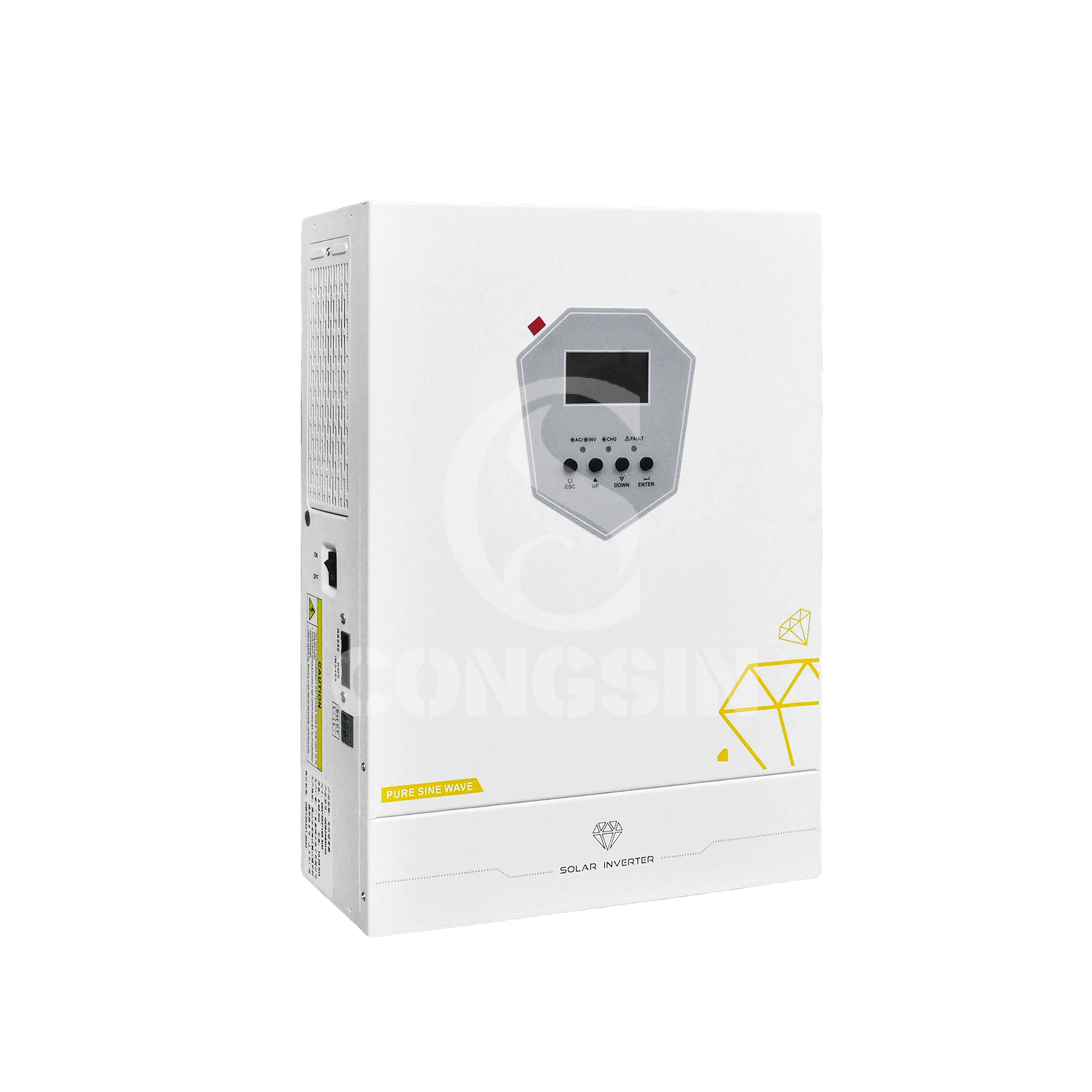
Factory Direct Sales 6000W Hybrid Solar Power Inverter with Controller and LCD Display
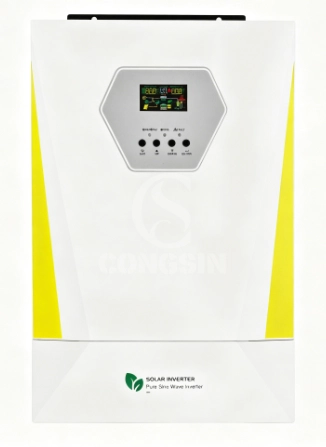
Congsin 4000W and 6000W Hybrid Inverter with Controller with LCD Display and CE Certification Solar
Power your solar system efficiently with the Congsin 4000W and 6000W Hybrid Inverter. Featuring an integrated MPPT Controller, this CE Certified inverter ensures optimal energy conversion. Monitor performance effortlessly via the intuitive LCD Display. Reliable, powerful, and ready for your sustainable energy needs.
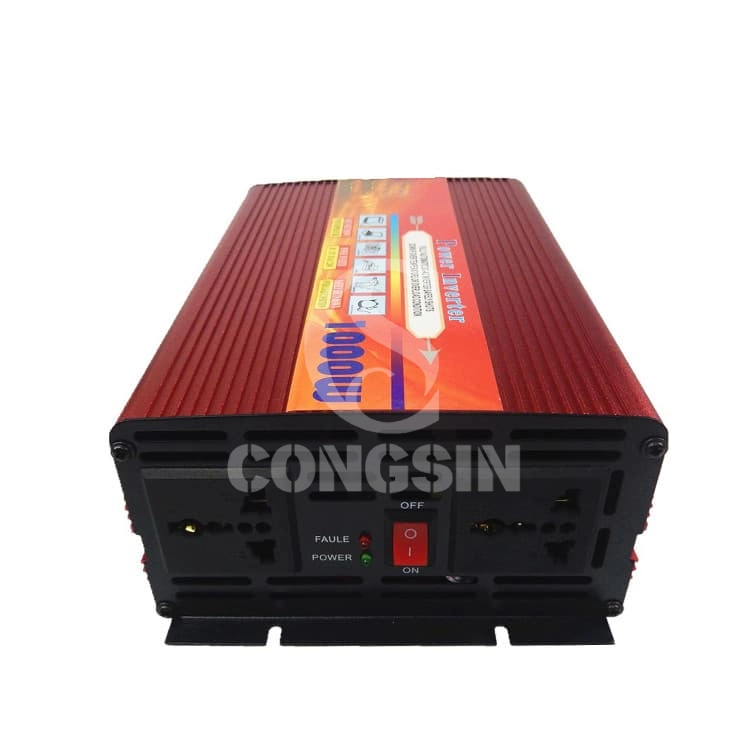
Congsin Manufacturer Wholesales Big Capability Modified Sine Wave Inverter with Red case and Double fan
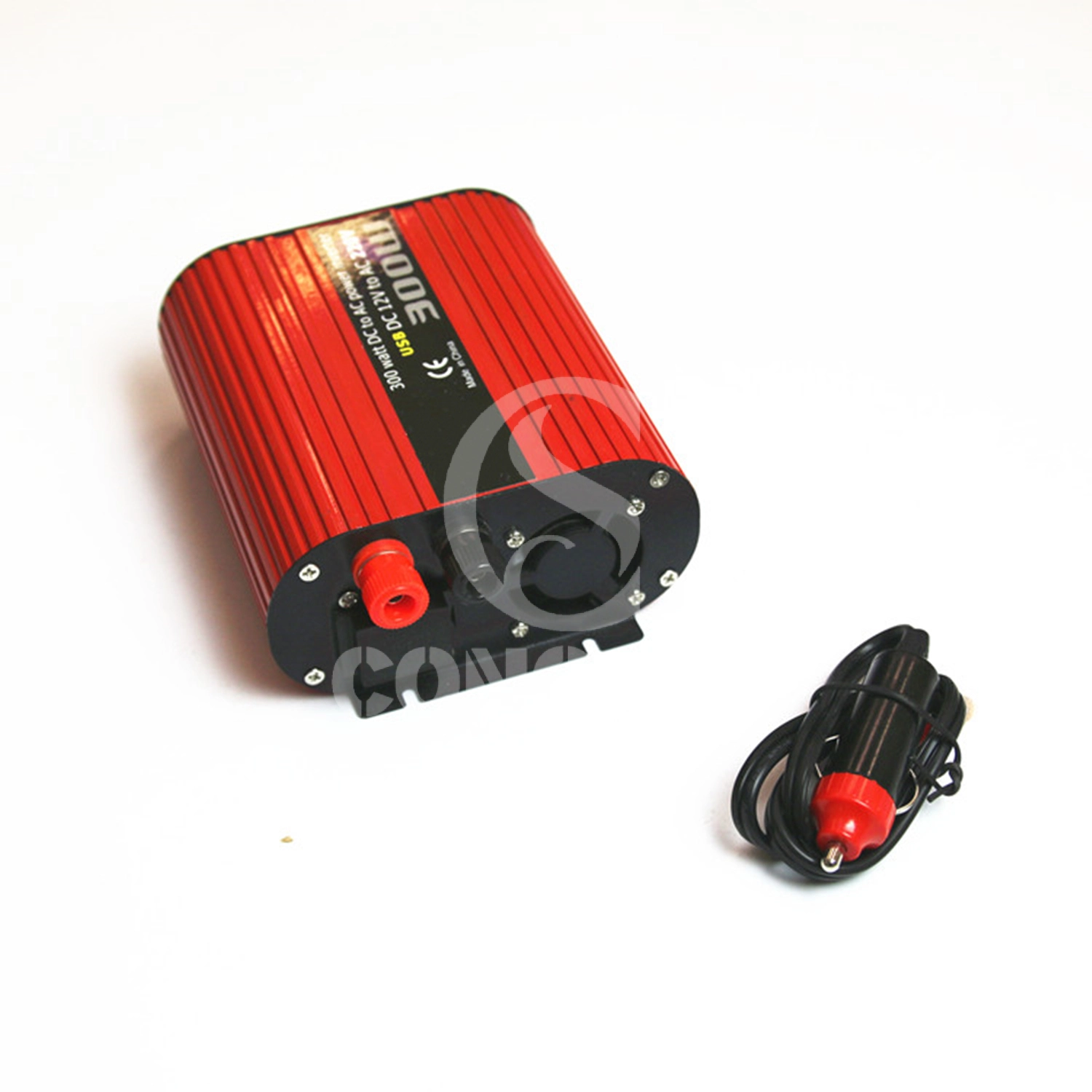
Factory Direct Sales Portable 150W Modified Sine Wave Inverter DC12V to AC220V Off-grid Sine Wave Inverter with Two USB and Universal Socket
Congsin's Portable 150W Modified Sine Wave Inverter powers your journey! This versatile Car Power Inverter with USB acts as a reliable 12V to 220V converter, ensuring an essential off-grid power supply. With dual USB ports and a universal socket, enjoy convenient power on the go.

CONGSIN is a trusted OEM factory for power inverters, solar charge controllers, and DC converters. Reliable solutions for global B2B buyers.
 High Quality
 7/24 Service
 Guaranteed Warranty
© 2025 Congsin. All Rights Reserved.
 WeChat
 Scan QR Code
sin cong
teaimei10
Whatsapp: +8618028086791
Scan QR Code